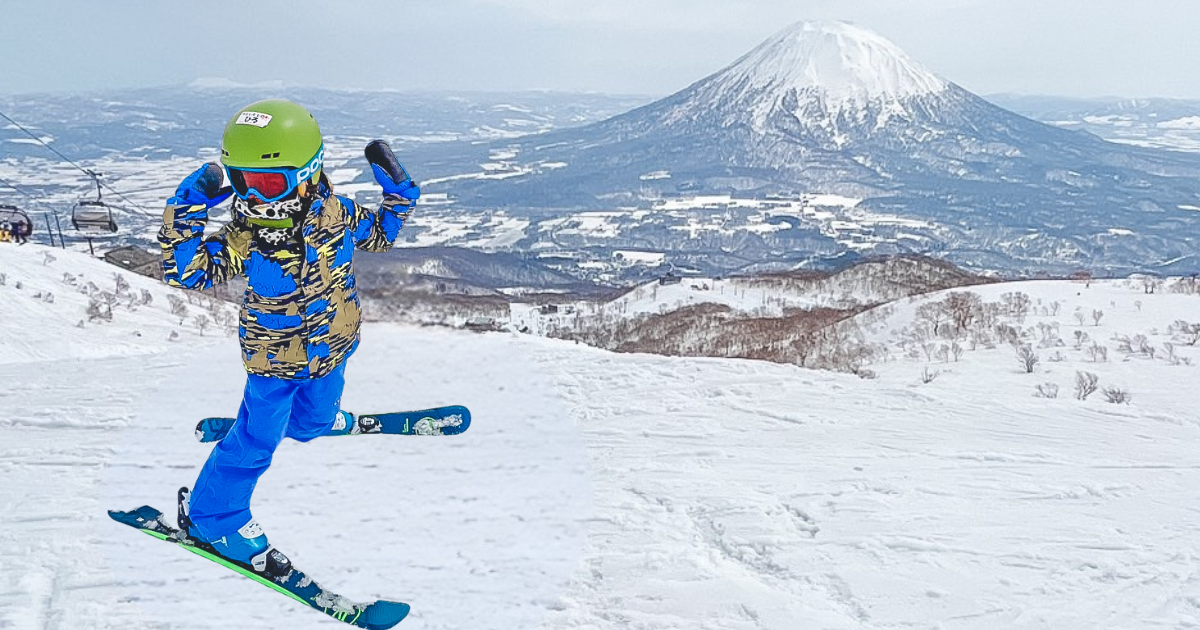
The pristine white snow mountains, the sparkling snow surface, and our child’s first ski debut – it was a heart-pounding, exciting moment as parents!
As we prepared for our child’s first skiing experience, we received many DMs and questions. “What age can they start?” “What preparation is needed?” “What should we watch out for safety-wise?” We realized many parents share the same concerns.
So today, I’d like to share in detail what we learned through actual experience about “things to watch out for when kids try skiing for the first time.”
Skiing is a sport where speed can build up surprisingly quickly. That’s why it’s crucial to properly understand the rules for safe enjoyment. But don’t worry! Once you know the key points, both kids and adults can fully enjoy this amazing winter sport. These are all simple rules, so don’t be afraid to give it a try!
What’s Covered in This Article
- POINT 1: Complete Guide to Cold Weather Gear
- POINT 2: Why Bright Colored Wear Can Save Lives
- POINT 3: How to Use Magic Carpets
- POINT 4: Safe Lift Boarding and Alighting
- POINT 5: Tips for Using Gondolas
- POINT 6: Basic Overtaking Rules
- POINT 7: The Importance of Not Sitting on Slopes
- POINT 8: Choosing Rest Spots
- POINT 9: Priority at Merge Points
- POINT 10: Essential Items for Lost Child Prevention
- POINT +α: Choosing Ski Schools
- International Ski Federation Rules Explained
- Preparation Checklist
POINT 1: Never Underestimate Cold Weather Protection in Winter Mountains!
When skiing all day, cold weather protection is absolutely critical. Children especially need extra attention since their body temperature regulation is still developing.
Mountain temperatures are significantly lower than ground level, and when wind blows, the perceived temperature drops even further. Moreover, beginner children fall and touch the snow frequently, making thorough cold protection essential.
Body Protection
- Uniqlo Heattech: Excellent as a base layer. However, watch out for kids who sweat a lot! Sweat-soaked clothes can actually make them colder, so bring spare shirts for midday changes
- Fleece top and bottom: Fleece or sherpa mid-layers create air pockets that enhance insulation
- Adhesive heat packs: Effective when applied to the back or lower back. However, children’s skin is sensitive, so watch for low-temperature burns. Apply them over clothing
- Thin jacket: A windbreaker-type layer that blocks wind is perfect
- Ski wear: The balance between waterproofing and insulation is important
The layering basics are a three-layer structure: “Base layer (moisture-wicking) → Mid layer (insulation) → Outer layer (windproof/waterproof)”. Since kids work up a sweat from moving around, layers that are easy to take on and off are key.
Hand Protection
- Thin gloves (inner gloves): The first line of defense to prevent bare hands from touching snow
- Mitten-type gloves: Mittens are warmer than five-finger gloves! The insulation effect is higher because the fingers aren’t separated
Kids love playing in the snow, so gloves will get wet. Bring 1-2 spare pairs. Continuing to ski with wet gloves will quickly make fingertips cold.
Foot Protection
- Thick socks: Ski-specific thick socks are best. Choose long ones that cover up to the calves
Ski boots are tight, so wearing two pairs of socks can actually reduce blood circulation. One pair of thick socks is sufficient.
Face Protection
- Face mask (neck warmer): Protects from neck to face. Essential on windy days
- Goggles: Protects eyes from snow and wind. Anti-fog features are recommended
On particularly windy days, exposed faces can even get frostbite. Take frequent breaks before your child says “I’m cold.”
The key is to thoroughly warm the four “necks” – neck, ankles, wrists, and neck (face/head). Large blood vessels pass through these areas, so warming them makes the whole body feel warm.
Start wearing cold weather gear from the moment you leave the hotel or home in the morning. If it’s too hot in the car, you can always take layers off – the important thing is to be fully prepared for the cold.
POINT 2: Bright Ski Wear is a Safety Measure
Mountain weather really is unpredictable. Even if morning is clear, it’s not unusual for it to suddenly become a blizzard in the afternoon. Especially during whiteouts (when visibility becomes completely white), people wearing pale colors truly become invisible.
Choose bright or dark colored ski wear!
Recommended colors include fluorescent yellow, orange, pink, and blue. Colors to avoid are white, beige, and pastel colors.
During this ski trip, we actually encountered a whiteout. With visibility down to about 5 meters, I experienced firsthand how children wearing pale colors blend into the snow and become difficult to see. On the other hand, our child wearing dark blue and camouflage patterns was clearly visible even in the snow.
This isn’t just about fashion – it’s a critical safety point. Especially for kids who aren’t yet accustomed to skiing and make unpredictable movements. Bright wear that’s visible from far away also gives parents peace of mind.
If your available wear is a pale color, try choosing bright-colored items for backpacks or helmets. Attaching bright patches or stickers is another option.
POINT 3: Beginner’s Best Friend! Make Use of Magic Carpets
More and more ski resorts are installing “magic carpets” – like moving walkways. These are moving floors installed in beginner areas that allow you to easily go uphill while wearing skis.
Magic Carpet Benefits
- Practice repeatedly: Unlike lifts, there’s almost no wait time, and even if you fall you can get back quickly, so you can do many runs in a short time
- Less fear: Unlike lifts, you don’t go to high places, so children aren’t scared
- Free to use: Many ski resorts offer them for free
- High safety: Speed is slow, and you can get off anytime, making it safe
For beginner children, the most effective way to master the basic “stop and turn” movements is to repeatedly ski short distances. Magic carpets allow focused practice without getting tired.
Our child spent the first 1-2 hours thoroughly practicing in the magic carpet area. Watching them gradually grasp the feeling of stopping in a wedge position through repeated runs down the gentle slope was a joyful moment as a parent.
Finding Ski Resorts with Magic Carpets
When choosing a ski resort, check their website for “beginner area” or “kids park” facilities. Recently, many ski resorts have enhanced beginner facilities, with dedicated snow play areas and places for sledding.
By the way, if taking ski lessons, practice in the magic carpet area is usually the foundation, so whether this facility exists is an important point.
POINT 4: The Rules for Riding Lifts
After graduating from the magic carpet area, it’s time for the lift debut! But the first lift ride is nerve-wracking for both children and parents. Let’s understand the key points for safe boarding and alighting.
Boarding Points
- Seat the child on the outside (mountain side): To prevent falls, adults sit on the valley side
- Board slowly: Don’t rush, check the lift chair carefully before sitting
- Tell the attendant: If you mention it’s your first time, they may slow down the lift speed
On our first lift experience, when I told the attendant “it’s my child’s first time,” they deliberately slowed the lift speed. They also gave encouraging words like “You can do it!” which helped ease our child’s tension.
Points While Riding
- Always lower the safety bar: The safety bar is essential to prevent falling mid-ride
- Keep ski tips pointing forward: Point them straight ahead so the skis don’t get tangled
- Stay calm and enjoy the scenery: Getting scared makes you more tense, so distract them with comments like “The view is beautiful”
Alighting Points
This is the most important part!
- Prepare as the exit approaches: Raise the safety bar and slightly lift the ski tips
- Keep ski tips raised while exiting: Keep tips up so they don’t stick in the snow surface
- Move forward immediately after exiting: Never stop! The next lift is coming from behind
“Move forward after exiting, don’t stop!” We repeated this to our child many times. In fact, you often see kids who fall at the exit, but stopping there is dangerous. Even if you fall, immediately move to the side to stay out of the next person’s way.
Staff are always watching, and if you ask to “slow down the speed,” they’ll accommodate you, and they’ll sometimes help you exit. Don’t hesitate to ask for help.
POINT 5: Notes on Riding Gondolas
Gondolas (box-type lifts) feel safer than chair lifts since they’re enclosed spaces, but boarding and alighting require their own techniques.
How to Board Gondolas
Bring your child’s skis inside and board slowly.
Some types have racks outside to stand skis, but this can be difficult for beginner children. If it’s a type that allows skis inside the gondola, it’s safer to board together.
Unexpected Gondola Benefits
In the past, gondolas were a means for intermediate and advanced skiers to access expert courses at mountain peaks. However, the situation has been changing recently.
More ski resorts have gondolas specifically for beginner courses!
This has major benefits:
- Escape the cold: Enclosed space means warm travel out of the wind
- Serves as rest: Precious time to sit and rest comfortably
- Enjoy scenery: Leisurely view the snow landscape through windows
- Can converse: Unlike chair lifts where wind drowns out voices, you can enjoy conversation in gondolas
We chose a ski resort where gondolas could access beginner courses. Our child was delighted, saying “It’s like an aerial walk!” In the gondola, while drinking warm cocoa, we could recharge for the next run.
However, during crowded times, gondola wait lines can get long. Particularly around midday on weekends requires caution. Early morning or late afternoon tends to be less crowded and recommended.
POINT 6: Overtaking Rules – “The Person Ahead Has Priority”
This is one of the most important rules on ski slopes. The person skiing ahead has absolute priority.
Why Does the Front Person Have Priority?
Skiing and snowboarding are basically sports where you “can only see forward.” Even if someone approaches from behind, there’s no leeway to look back. That’s why those overtaking from behind have the responsibility to ensure the safety of those ahead.
Safe Overtaking Method
- Maintain sufficient space: Keep at least 2-3 meters distance
- Anticipate unpredictable movements: Especially kids and beginners may suddenly change direction
- Call out: Good manners to say “Passing!”
- Slow down: Don’t force the overtake, prioritize safety
Special caution is needed when overtaking children or beginners. Their movements are unpredictable. They might suddenly fall, suddenly stop, or turn in unexpected directions.
Our child also sometimes suddenly tried to cross the slope, surprising skiers coming from behind. Fortunately, the other person maintained sufficient distance so there was no accident, but it was a heart-stopping moment.
Conversely, when your child is a beginner and being overtaken by advanced skiers, it’s also important to cooperate by saying “Let’s slowly move to the edge” to make overtaking easier.
POINT 7: Never Sit in the Middle of Slopes – Absolutely Not!
This is truly dangerous behavior. You actually see cases quite often where children who fall sit right in the middle of the slope.
Why is the Middle of Slopes Dangerous?
- Poor visibility: Especially kids are short, making them hard to see from above
- Difficult to avoid: On steep slopes, it’s hard to stop or suddenly change direction
- Risk of chain accidents: When one person falls, there’s a risk of “pile-up accidents” where others trying to avoid them also fall
Once, there was a parent and child resting in the middle of a slope. A snowboarder coming from above noticed late and could barely avoid them, but if they’d been a few seconds later, there definitely would have been a collision.
What to Do When You Fall?
When you fall, adults should immediately help and guide the child to the edge of the slope.
Specific steps:
- First, stand above the child (upslope) to become a shield preventing collisions
- Help the child up and move together to the edge of the slope
- Once at the edge, adjust equipment
Small children tend to sit right where they fall. It’s important to repeatedly teach them in advance: “When you fall, immediately go to the edge.”
In our family, we used a rhyme to remember: “When you fall, go to the ‘edge’!” When they actually fell several times, repeating “edge, edge” each time, we started seeing them try to move to the edge on their own.
POINT 8: Rest Spots – Always Check “Can I Be Seen from Behind?”
Just because you’ve moved to the edge of the slope doesn’t mean you’re completely safe. Actually, there’s a pitfall here too.
Blind Spots Created by Slope Undulations
Ski resort slopes may look smooth, but actually have many small ups and downs. The following locations require special caution:
- In front of or in the shadow of moguls: Sitting in the valley of moguls (bumpy terrain) makes you invisible from above
- Where slope angle changes: Points where steep slopes become gentle slopes often have obstructed views
- Inside curves: The inside of course curves has poor visibility from above
Even though you think “I’m at the edge so it’s fine,” you’re often not actually in the view of people skiing from above.
Choosing Safe Rest Spots
When resting, check these points:
- Look back and confirm: Actually look upward to check if you can be seen
- Choose flat areas: Preferably gentle slopes where visibility from above is open
- Avoid course merge points: Places where multiple courses merge get crowded
- Avoid near lift exits: Areas where people concentrate are dangerous
In our family, we made it a habit to always check together with our child “Can we be seen from above?” before resting. Though it seemed troublesome at first, through repetition, our child started being able to judge “This might be dangerous” themselves.
Ideal Rest Spots
The safest are rest areas or benches set up beside courses. Many ski resorts have such rest spots along the course. Even if it’s a bit out of the way, moving to such places is safer.
If you must rest beside the course, standing your skis up as markers is one method. However, make sure to firmly stick them in the snow so they don’t fall over in strong winds.
POINT 9: At Course Merge Points, the Main Course Has Priority!
Ski resort course designs often follow a structure where “multiple courses branch from the lift exit and merge again at the lift boarding area.” Therefore, you’ll definitely encounter merge points while skiing.
Merging Rules
People skiing on the main course (wider course) have priority.
This is similar to road merging. Just as cars on the main road have priority, at ski resorts too, people skiing the main course have right of way.
Why Does the Main Course Have Priority?
- More people: Many people are skiing the main course, making it difficult to stop or slow down
- Higher speed: Main courses are longer, so people are often going at higher speeds
- Visibility issues: At merge points, it’s impossible to check everyone entering from the side
Safe Procedure When Merging
When merging from a side path to the main course:
- Stop temporarily before the merge point: Don’t rush in
- Check the main course flow: Look carefully to see if anyone is coming from above
- Wait for timing: Merge when sufficient space opens up
- Accelerate after merging: Once merged, pick up speed to not obstruct those behind
At ski resorts, after getting off the lift there are multiple courses, and kids sometimes say “I want to go on this course!” However, choosing a course that doesn’t match their level can create dangerous situations when merging.
In our family, we make plans by looking at the trail map in advance, saying “Let’s ski this course today.” Our child also enjoys looking at maps and started checking “Where should we go next?” on their own.
At merge points, more people gather than you’d imagine. Especially on weekends and holidays it gets crowded, so act with plenty of time. Don’t rush – judge with safety first.
POINT 10: Keep Contact Information in Lift Ticket Holder
Kids’ improvement speed will surprise parents. Shaky steps in the morning can become smooth skiing by afternoon – this isn’t unusual.
The “Lost Child” Risk Behind Improvement
As children improve, they want to ski independently away from parents. This is proof of growth, but it also increases the risk of getting separated.
Actual scenarios:
- While parents take a bathroom break, the child skis ahead
- Get separated on the lift and lose sight of each other at the exit
- You thought “let’s go on this course” but the child entered a different course
- In a blizzard with poor visibility, you lose sight of them in a moment
Where to Keep Contact Information
In the lift ticket holder (or goggle case, wear pocket), keep a memo with the following information.
Information to write:
- Child’s name
- Parent’s name
- Cell phone number (preferably two)
- Lodging location (if staying overnight)
- Emergency contact
Keep the memo in a waterproof bag or laminate it for safety. Ziploc bags sold at 100-yen shops are sufficient.
Other Lost Child Prevention Measures
Besides contact memo, these measures are effective:
- Attach noticeable markers: Put stickers on helmets, attach bright keychains to backpacks, etc.
- Decide meeting places: “If we get separated, meet at the ○○ at the lift boarding area” – decide specific locations
- Smartphone location sharing: For upper elementary and above, carrying a smartphone with location sharing is an option
Actually, our family had one close call. After getting off the lift, our child skied ahead while I was adjusting equipment and I lost sight of them. Fortunately we found them in about 10 minutes, but the anxiety during that time was indescribable. Since then, we’ve always included a contact memo.
Also Check Ski Resort Information
Some ski resorts have lost child centers or public announcement services. Checking the information center location before skiing provides peace of mind.
You might think “Lost child is an exaggeration,” but better safe than sorry. If just a few minutes of preparation lets you enjoy the whole day with peace of mind, it’s well worth doing.
POINT +α: The Ski School Option
“Teaching yourself vs. having professionals teach – which is better?” This is a point many parents struggle with.
Ski School Benefits
- Learn proper technique: Learn correct form before self-taught habits form
- Reduces parent stress: Teaching your own child is surprisingly difficult. You might get frustrated
- Learn with peers: In group lessons, they can make friends and have fun
- Solid safety management: Professional instructors constantly keep watch
- Priority lift boarding: At some ski resorts, school students can board lifts with priority
Benefits of Parent Teaching
- Lower cost: School fees range from several thousand to 10,000 yen per day
- One-on-one instruction: Can completely match the child’s pace
- Becomes parent-child memories: Special memory of “Dad/Mom taught me”
- Flexible schedule: Can freely decide break and end times
Our Choice
We decided to enroll in school just for the first morning. The reason: “We wanted professionals to teach the basics.”
The result was a great success! In just a 2-hour lesson, they mastered stopping and turning in a wedge. We could ski together as a family in the afternoon. The instructor praised “Your child picks things up quickly!” which boosted motivation too.
Points for Choosing a School
- Classes divided by age/level: Can learn with kids at similar levels
- Small groups: Ideally 4-5 students per instructor maximum
- Japanese support: If foreign instructors, confirm Japanese communication is possible
- Cancellation policy: Check in advance how they handle bad weather or illness
Considering the “Skiing Adult Psychology” Too
Actually, many intermediate and advanced skiers try to avoid “groups of little kids” when they see them. This is an instinctive danger avoidance – trying to distance from “groups with unpredictable movements.”
School groups have instructors leading and guiding them, so other skiers recognize “that’s a school” and tend to maintain safer distances.
Adults Can Join Schools Too
Many parents secretly worry “Actually, I haven’t skied in a while and I’m anxious…” Most ski resorts offer adult lessons. Parents can join separate classes and compare notes at lunch saying “How was it?” – that also becomes a fun memory.
Whether to join school or not depends on budget, time, and child’s personality. There’s no right answer. What’s important is that the child thinks “Skiing is fun!”
International Ski Federation (FIS) 10 Rules – Must Check!
Ski resorts display posters showing the “10 Rules” established by the International Ski Federation (FIS). These are globally common ski resort manners – basic rules all skiers and snowboarders should follow.
Importance of FIS 10 Rules
These rules are based on years of accident analysis and safety research. Consider them not just manners, but “safety standards” that protect lives.
Main points:
- Consideration for others: Always be thoughtful of those around you
- Speed and ski control: Match speed to your skill level
- Route selection: Don’t endanger those ahead
- Overtaking: Maintain sufficient distance
- Merging and entering slopes: Check up, down, left and right first
- Stopping on courses: Don’t stop in narrow or low-visibility spots
- Climbing/walking: Use the edge of courses
- Obeying signs/markings: Follow signage and markers
- Rescue activities: Prioritize rescue in case of accidents
- Identification: In case of accidents, all involved must identify themselves
Check Every Season
“I ski every year, why review rules now…” some might think. But like driving, accidents happen most when you’re comfortable.
Veteran skiers especially should review rules before the season starts. When skiing with kids especially, you’re responsible not just for your safety, but your child’s and everyone around you.
Learning Rules with Kids
When you arrive at the slopes, before boarding the lift, take time to review rules together at this poster.
In our family, we have a “daily safety check time” and take commemorative photos in front of the poster every time. Our child started understanding “the importance of following rules” and even points out “That person isn’t following rules” (a bit cheeky, but proof that safety awareness is growing).
Rule Checking in the Digital Age
Recently, many ski resorts provide smartphone apps. You can check rules in the app or watch explanatory videos, so reviewing them with your child during lift waits is also recommended.
Tips for Successful Ski Debuts
1. Don’t Rush, Go at Your Child’s Pace
Improvement speed varies for each child. No need to compare with other kids. Celebrate small successes together like “Today you stopped in a wedge!” or “You rode the lift!”
2. Praise Abundantly
It’s important to specifically praise what they accomplished. “You stopped well!” “Turning was smoother than before!” – verbalize their growth.
3. Take Frequent Breaks
Kids sometimes keep skiing without realizing they’re tired. Take breaks every 1-2 hours and restore energy with warm drinks or snacks.
4. Don’t Push It
If weather worsens, the child is tired, or injury seems likely, have the courage to decide “That’s enough for today.” This is also important.
Preparation Checklist
Finally, let me summarize items needed for skiing with kids.
Wear & Equipment
- Ski wear (bright colors)
- Helmet
- Goggles
- Face mask/neck warmer
- Gloves (2-3 pairs including spares)
- Thick socks
- Inner wear (including changes)
Other Essentials
- Sunscreen (snow burn is surprisingly intense!)
- Lip balm
- Water bottle (warm drinks)
- Snacks/light meals
- Towel (for sweat)
- Tissues/wet wipes
- Simple first aid kit like band-aids
- Complete change of clothes (for when wet)
- Plastic bags (for wet items)
- Contact memo
Convenient to Have
- Disposable heat packs
- Spare goggles
- Waterproof camera or GoPro
- Waterproof smartphone case
- Easy-to-change-in clothes for the car
Attractions of Hokkaido Ski Resorts
Hokkaido ski resorts are truly wonderful.
Best snow quality: Called powder snow – fluffy, light snow. Doesn’t hurt when you fall, perfect for beginners.
Spectacular scenery: Pure white snow mountains, blue sky, and on clear days you can see beautiful mountains like Mt. Yotei.
Delicious food: You can also enjoy Hokkaido cuisine. Even ski resort restaurants have delicious menus like ramen, curry, seafood bowls.
Hot springs nearby: Many ski resorts have hot springs nearby. Hot springs after skiing are exceptional!
In Conclusion
Skiing with kids becomes truly wonderful memories with preparation and safety awareness. You might feel anxious at first, but if you keep these 10 rules in mind, you can enjoy safely.
Following rules not only protects your own safety, but also protects the safety of those around you. Let’s each individually contribute to creating slopes where everyone can ski comfortably.
This season, please try challenging a family ski trip. On the pure white snow, you might discover new sides of your child. And above all, the memory of “enjoying together as a family” should become a lifelong treasure.
I look forward to meeting you on the snow mountains!
Safety first, and enjoy your ski life!
Ready to Plan Your Hokkaido Adventure?
Get my detailed family travel guides with handpicked hotels, realistic itineraries, and insider tips from 30 years of local knowledge.
View Digital Travel Guides →